


Summer Hours
(France/2008/103 min)
Directed by Olivier Assayas
Preceded by a short film TBA.
***
Menu: Summer Picnic
Deviled eggs
Farro salad
Lentil salad
Bread salad
Potato salad
Thai beef salad
Salad salad
You get the idea salad
Peach or berry cobbler
Posted in dinners, screenings | Leave a Comment »


Taken by David Roccaforte


Taken by David Roccaforte

Taken by David Roccaforte

Taken by David Roccaforte
Posted in dinners, food | Leave a Comment »
Killer of Sheep
(USA/1977/83 min)
Directed by Charles Burnett

Declared a national treasure by the Library of Congress, Killer of Sheep explores the L.A. ghetto of Watts in the mid-’70s through the eyes of Stan, a sensitive dreamer who is growing detached from the psychic toll of working at an abattoir. Due to the expense of the music rights, Killer of Sheep was kept from distribution for three decades, until finally being restored and released in 2007.
Preceded by
Lamb to the Slaughter
(USA/1958/30 min)
Directed by Alfred Hitchcock

Hitchcock takes on a classic Roald Dahl short story.
***
Menu: Lamb Six Ways to Sunday
prepared by guest chef Tim Kemp
Sweetbreads, Asparagus-Bacon Consommé
Shoulder, Ramp Top Cavatelli, Salvatore Bk Ricotta
Belly, Crayfish, Green Garlic-Miso, Sichuan Peppercorns
Saddle, Morels, Rhubarb, Chive Blossom
Constant Bliss, Candied French Breakfast Radish
Rhubarb Tart, Compressed Strawberry, Basil Ice Cream
Posted in screenings | Leave a Comment »

Pep rallies. Gym class. Formals. The principal’s office. Home Ec. Home Ec? What do you miss most about high school?
America’s greatest living filmmaker, documentarian Fredrick Wiseman, is being treated to a year-long retrospective of his work at MoMA. High School, his second film, is a fascinating look not just at the rite-of-passage institution that every American teenager goes through, but also at the mores and gonzo-gender politics of the 60s.
Preceded by: Powers of Ten (USA/1977/9 min) Directed by Charles and Ray Eames
What better way to celebrate the tenth Choice Cuts, than with Charles and Ray Eames’ sci-non-fi short. Starting on a couple of picnickers the camera pulls back (and back and back…) by powers of ten each second, before zooming back in the reverse direction. Truly a wonder, and better than any video you were made to watch in science class, unless, of course, you had a really hip science teacher who showed it to you.
Two Solutions for One Problem (Iran/1975/4 min) Directed by Abbas Kiarostami
This charmer about two schoolboys from Iranian auteur, Kiarostami, wryly presents a problem and offers two solutions. Which is better? You decide.
***
Menu: St. Patrick’s Day, or Not School Lunch
Brotchán foltchep (The King’s Soup)
Brown bread and soda bread
Corned beef and cabbage
Champ
Guinness cake and Guinness ice cream
BYO_.
Posted in dinners, directors, film, food, screenings | Leave a Comment »

Before Grant, Hepburn and Cukor teamed up for The Philadelphia Story, they collaborated on this stellar romantic comedy. Grant upends Hepburn’s highfalutin’ upper-crust family, just as they are set to celebrate a posh, dignified New Year’s wedding announcement between he and Hepburn’s sister. Hilarity and late-Depression era escapism (so timely for us!) ensue. This holiday classic features some of the best performances its leads ever turned in, and a little bit of Vaudevillian acrobatics from Grant, to boot.
Preceded by: Gasman (Scotland/1997) Directed by Lynne Ramsay

A father takes his children to a Christmas party that they do not care to attend. Their world changes by the people they meet there. Ramsay, who went on to direct Ratcatcher and Morvern Callar, has a knack for making the most understated gestures powerful.
One Ham’s Family (USA/1943) Directed by Tex Avery

A hungry wolf gets more than he bargained for when he goes for some Christmas ham.
***
Menu:
Roast goose
Goosefat-roasted potatoes
Pear relish
Brussels sprouts
Green beans
Gingerbread cake
Lemon tart
Eggnog
BYO_.
Posted in Uncategorized | 1 Comment »
Before convening for Thanksgiving this year, pull up a chair for a Swedish take on the family-style meal.
Tilsammans (Together) (Sweden/2000) Directed by Lukas Moodysson
It’s November 1975 in Stockholm. News of Franco’s death and the strains of ABBA fill the airwaves. Despite ostensibly sharing crunchy views of family, food, politics, relationships, sex, music and hygiene, a group of radical young hippies struggle to continue get along in their communal house, earnestly named “Tilsammans”, as the world changes outside their patchouli-scented walls. A monkey-wrench is thrown at their peace-lovin’ ideals when one of their members opens their beaded doorways to his more mainstream sister and her children, who are escaping her abusive husband.
Preceded by: A Chairy Tale (Canada/1957) Directed by Norman McLaren and Claude Jutra With Claude Jutra, A Chair Music by Ravi Shankar and Chatur Lal Presented by Aisling Yeoman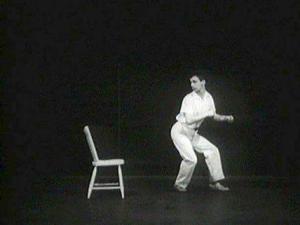
This delightful short from experimental filmmaker Norman McLaren is a pas-de-deux between Claude Jutra and an unaccomadating chair, animated by Evelyn Lambart.
***
with guest chef Ganda Suthivarakom
Menu: Skal! A Swedish Thanksgiving
smor och sill (a herring sampler)
kottbullar (meatballs)
pressgurka (pickled cucumbers)
mashed potatoes
cranberry sauce
kladdkaka (chocolate cake)
Barbro’s tarta (almond meringue custard cake)
BYO_.
Posted in dinners, screenings | 1 Comment »


 Choice Cuts
